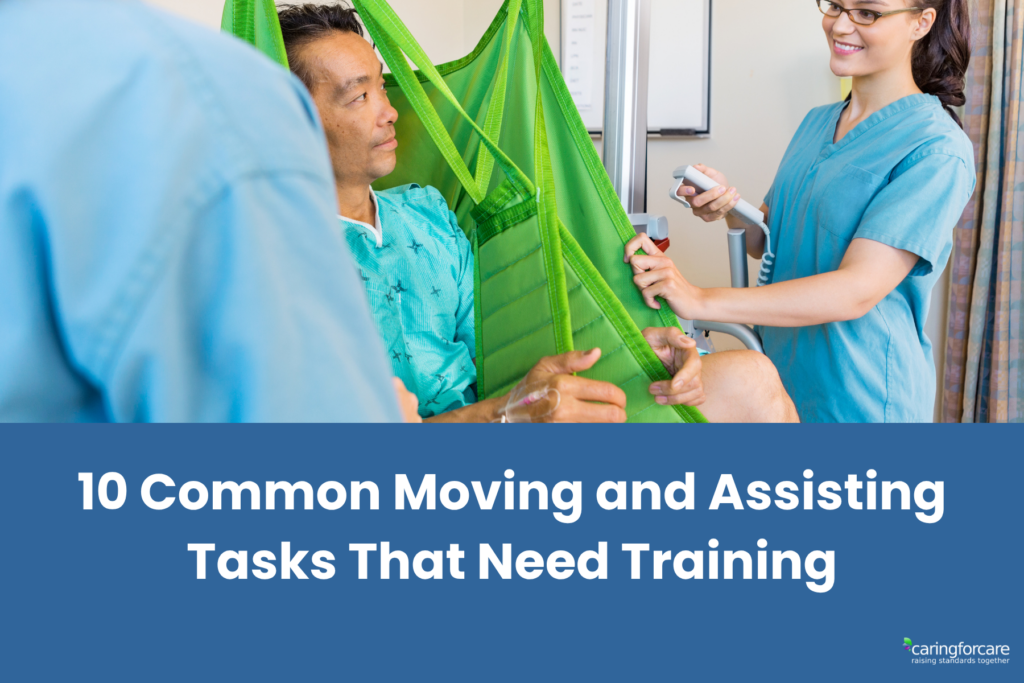
10 Common Moving and Assisting Tasks That Need Training
Moving and assisting people safely is a core part of health and social care, but many tasks require proper training to prevent injuries to both staff and patients.
These tasks involve understanding body mechanics, using equipment correctly, and following safe‑handling principles.
Tasks that require formal training include:
- Helping someone stand or sit
Supporting a person to rise from a bed or chair without causing strain or imbalance.
- Assisting with walking or mobility
Using walking belts, frames, or hands‑on support safely while preventing falls.
- Turning or repositioning in bed
Techniques such as log‑rolling, lateral tilts, and micro‑movements to protect the spine and skin.
- Using slide sheets or transfer sheets
Reducing friction and shear while moving someone up or across the bed.
- Bed‑to‑chair or chair‑to‑bed transfers
Using transfer boards, hoists, or hands‑on methods safely and confidently.
- Operating hoists and lifting equipment
Including mobile hoists, ceiling track hoists, and standing aids — all of which require competency checks.
- Supporting someone who is falling
Knowing how to guide a fall safely without trying to catch the person or risking injury.
- Assisting with toileting or bathing transfers
Using bathroom equipment, commodes, and shower chairs safely.
- Handling bariatric patients
Using specialist equipment and team‑based techniques to manage higher weight loads safely.
- Assisting with stairs or steps
Safely guiding a person up or down stairs using specific hand-placement techniques, stairlifts, or mobility aids to prevent catastrophic falls and manage physical exertion.
What Does Moving and Assisting Mean?
Moving and Assisting (often called Moving and Handling) refers to the trained techniques and equipment used to help people with limited mobility move safely.
Unlike general manual handling, which involves lifting objects, Moving and Assisting focuses on supporting people — protecting their safety, comfort, dignity, and reducing the risk of injury for both the individual and the caregiver.
Why training is essential
- Prevents musculoskeletal injuries in staff
- Protects patients from skin damage, falls, and discomfort
- Ensures equipment is used correctly and safely
- Meets legal and regulatory requirements (e.g., Manual Handling Regulations)
- Promotes dignity, comfort, and confidence for the person being supported
Training ensures carers know how to move safely, when to ask for help, and which tools to use, creating a safer environment for everyone.