


Diabetes Training for School Staff
Health & Social Care Articles | Diabetes Training for School Staff
Diabetes Training for School Staff
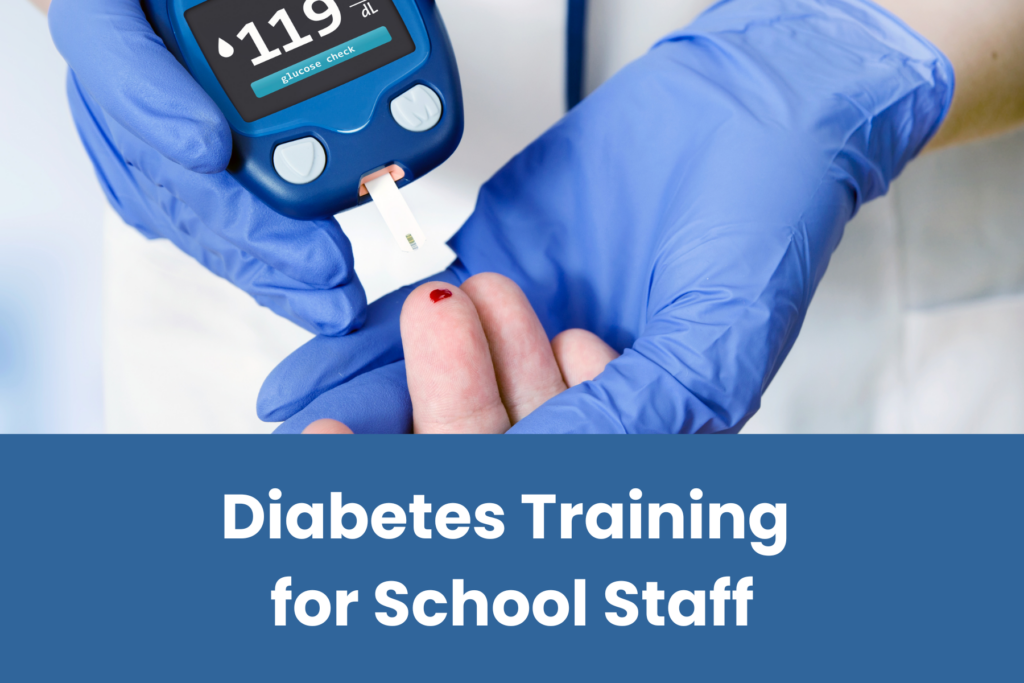
Schools play an important role in supporting children and young people living with diabetes. Staff need the confidence to recognise the signs of a diabetes emergency, respond appropriately, and provide safe day-to-day support that helps pupils thrive both academically and socially.
Our Diabetes Training for School Staff course equips teachers, teaching assistants, school nurses, lunchtime supervisors, office staff, SENCOs, pastoral teams, and other education professionals with the knowledge and practical skills to safely support pupils with Type 1 and Type 2 diabetes.
Delivered onsite anywhere in the UK by experienced healthcare professionals, this practical course helps schools meet their duty of care while creating a safe, inclusive learning environment for pupils with diabetes.
📚Related Courses: Blood Glucose Monitoring Training | Nutrition & Hydration Training
School Diabetes Course Options
We offer two levels of diabetes training (diabetes awareness and diabetes medication training) for schools, allowing you to choose the course that best suits your staff’s responsibilities.
Course Delivery
We deliver diabetes training:
- At your school
- At academies and trusts
- Independent schools
- Colleges
- Nurseries
- Special schools
- Alternative provision settings
Training is available throughout England, Scotland and Wales.
📚Click each option below to know which is best for your team.
🔽Level 2 Diabetes Awareness for Staff
Diabetes Awareness Training for School Staff
Designed for all school staff who need a clear understanding of diabetes and how to respond appropriately during the school day.
- Course Duration: 2-3 Hours
- Max Delegates: 12
- Course Level: Level 2
- Certificate: 2-year certificate
- Practical: No
- Course Mode: Face to Face or Virtual
Course Content
Understanding Diabetes
-
What diabetes is
-
Differences between Type 1 and Type 2 diabetes
-
How diabetes affects children and young people
-
Common causes and risk factors
-
The importance of good diabetes management
Recognising Diabetes Emergencies
-
Recognising hypoglycaemia (low blood glucose)
-
Recognising hyperglycaemia (high blood glucose)
-
Signs and symptoms requiring immediate action
-
When to seek emergency medical assistance
Supporting Pupils in School
-
Understanding Individual Healthcare Plans (IHPs)
-
Supporting pupils during lessons
-
PE, sports and physical activity
-
School trips and residential visits
-
Exams and classroom support
-
Encouraging independence while maintaining safety
Blood Glucose Monitoring Awareness
-
Understanding blood glucose monitoring
-
Continuous Glucose Monitoring (CGM)
-
Flash glucose monitoring systems
-
Supporting pupils who monitor their own glucose levels
Communication and Safeguarding
-
Working with parents and carers
-
Communicating with healthcare professionals
-
Record keeping
-
Confidentiality
-
Promoting privacy, dignity and inclusion
Emergency Procedures
-
Responding to a hypo or hyper episode
-
Emergency treatment awareness
-
When to contact emergency services
-
School emergency procedures
Assessment
- Assessment is carried out through:
- Trainer observation
- Practical participation
- Group discussions
- Knowledge checks
- There is no formal written examination.
🔽Level 3 Diabetes Medication for Staff
Diabetes Medication Training for School Staff
Designed for nominated members of staff who have agreed to support pupils with diabetes medication, including insulin administration and blood glucose monitoring, in line with the pupil’s Individual Healthcare Plan (IHP) and school policies.
- Course Duration: 4-6 Hours
- Max Delegates: 12
- Course Level: Level 3
- Certificate: 2-year certificate
- Practical: Yes
- Course Mode: Face to Face or Virtual
Course Content
This course includes everything covered in Diabetes Awareness Training, plus the following medication‑specific modules:
Blood Glucose Monitoring
-
Safe use of blood glucose meters
-
Continuous Glucose Monitoring (CGM)
-
Flash glucose monitoring systems
-
Recording and interpreting blood glucose readings
-
Infection prevention and equipment safety
Insulin Administration
-
Understanding different insulin types
-
Insulin pens and injection devices
-
Safe insulin storage and handling
-
Preparing and administering insulin
-
Injection sites and site rotation
-
Supporting pupils who use insulin pumps (awareness level)
-
Preventing medication errors
Managing Diabetes Medication
-
Administering medication in accordance with the Individual Healthcare Plan
-
Safe documentation and record keeping
-
Storage and disposal of sharps
-
Recognising medication‑related concerns
-
Escalating concerns appropriately
Practical Assessment
Participants will receive practical instruction and supervised practice in:
-
Blood glucose monitoring
-
Using insulin pens
-
Safe insulin administration techniques
-
Infection prevention procedures
-
Safe disposal of sharps
-
Responding to medication‑related emergencies
Diabetes medication administration requires a workplace-based competency assessment in addition to theory training. Classroom assessment alone is not sufficient. We only provide classroom assessment.
Regulatory bodies and clinical guidelines require direct, practical observation in the real working environment to confirm safe practice before any unsupervised administration can take place.
Which Course Does Your School Need?
Choose Diabetes Awareness Training if:
- Teachers need to recognise diabetes symptoms.
- Staff supervise pupils during the school day.
- Lunchtime supervisors need diabetes awareness.
- Teaching assistants require a basic understanding.
- PE staff support pupils during exercise.
- Office staff may respond during an emergency.
Choose Diabetes Medication Training if:
- Staff administer insulin.
- Staff monitor blood glucose levels.
- Staff supervise insulin injections.
- Staff provide one-to-one support for pupils with diabetes.
The school requires classroom competency-based medication training.
Importance of Diabetes Awareness and Medication Training for School Staff
Supporting pupils with diabetes is a critical part of a school’s duty of care. Children with Type 1 or Type 2 diabetes may need help throughout the school day to stay safe, manage their condition, and respond quickly to changes in their blood glucose levels.
Proper training ensures staff can provide this support confidently and in line with Individual Healthcare Plans and school policies.
Effective diabetes awareness and medication training helps staff to:
-
Recognise early signs of hypoglycaemia and hyperglycaemia and act quickly to prevent emergencies.
-
Understand how diabetes affects learning, behaviour and wellbeing, allowing staff to make appropriate adjustments in lessons, exams, sports and trips.
-
Follow care plans accurately, ensuring pupils receive the right support at the right time.
-
Carry out or supervise blood glucose monitoring safely, including CGM and flash systems.
-
Administer insulin correctly, preventing medication errors and ensuring pupils remain stable throughout the school day.
-
Maintain privacy, dignity and inclusion, supporting pupils sensitively and respectfully.
-
Communicate effectively with parents, carers and healthcare professionals, ensuring consistent care between home and school.
-
Respond to emergencies confidently, knowing when and how to escalate concerns or call for medical assistance.
About Our Onsite Diabetes Training for Schools
Our onsite diabetes training gives your staff the skills and knowledge with confidence to support pupils with Type 1 and Type 2 diabetes safely throughout the school day.
This can be delivered withiin your school, the session covers diabetes awareness, recognising emergencies, blood glucose monitoring, insulin administration, and following Individual Healthcare Plans.
Depending on options, training is hands‑on, tailored to your pupils’ needs, and designed to strengthen safeguarding, inclusion, and day‑to‑day care.
How We Deliver Onsite Diabetes Training
We deliver diabetes awareness and medication training directly at your workplace, giving your team the opportunity to learn in a familiar, practical environment. Our approach is straightforward and shaped around the needs of your service:
-
Training delivered at your premises Our trainers travel to your location anywhere in the UK, making it easy for staff to attend without disrupting routines.
-
Flexible session times We schedule training on dates and times that work best for your team, including mornings, afternoons, or full‑day sessions.
-
Content tailored to your service The session is adapted to the individuals you support, your medication processes, and any diabetes‑related challenges your staff regularly encounter.
-
Hands‑on, practical learning Staff take part in demonstrations, case‑based discussions, and guided practice to build confidence in recognising symptoms, responding to emergencies, and supporting safe medication administration.
-
Real‑life examples from your setting Trainers use scenarios relevant to your organisation, helping staff understand how to apply best practice in day‑to‑day situations.
-
Active group involvement Q&A, group discussions, and team activities ensure staff stay engaged and can share experiences from their own roles.
-
Accredited certification All participants receive an accredited certificate upon completion, supporting compliance and professional development requirements.
What Schools Should Prepare Before Training
To ensure we can deliver effective onsite diabetes awareness and medication training, please have the following arrangements in place:
Suitable training space Provide a quiet room with enough space for the group and any practical demonstrations. A comfortable environment helps staff stay focused.
Basic equipment Chairs and a table are usually sufficient. A screen or projector is helpful if available, though we can bring our own resources when needed.
Staff availability Please ensure all attendees are free for the full duration of the session and won’t be called away for other duties.
Relevant pupil information Any Individual Healthcare Plans (IHPs), behaviour notes, incident records or school procedures you can share will help us tailor the session to your pupils’ needs.
Context about your setting A short overview of the pupils you support, common challenges, and any specific learning priorities allows us to shape the training effectively.
Site guidance Let us know about any access instructions, safeguarding requirements, or health and safety rules we need to follow while on site.
Named contact A staff member should be available to meet the trainer, provide room access, and help coordinate attendees.
Restroom access Please ensure clean, accessible toilets are available close to the training room.
Refreshments Access to drinking water is essential. Tea or coffee for attendees and the trainer is appreciated where possible.
Internet access Guest Wi‑Fi is helpful for digital materials or presentations, if your school allows it.
Tell us how we can help
Tell us what you need and we will find the best solution for you fast - getting back to you within one working day - (usually the same day)