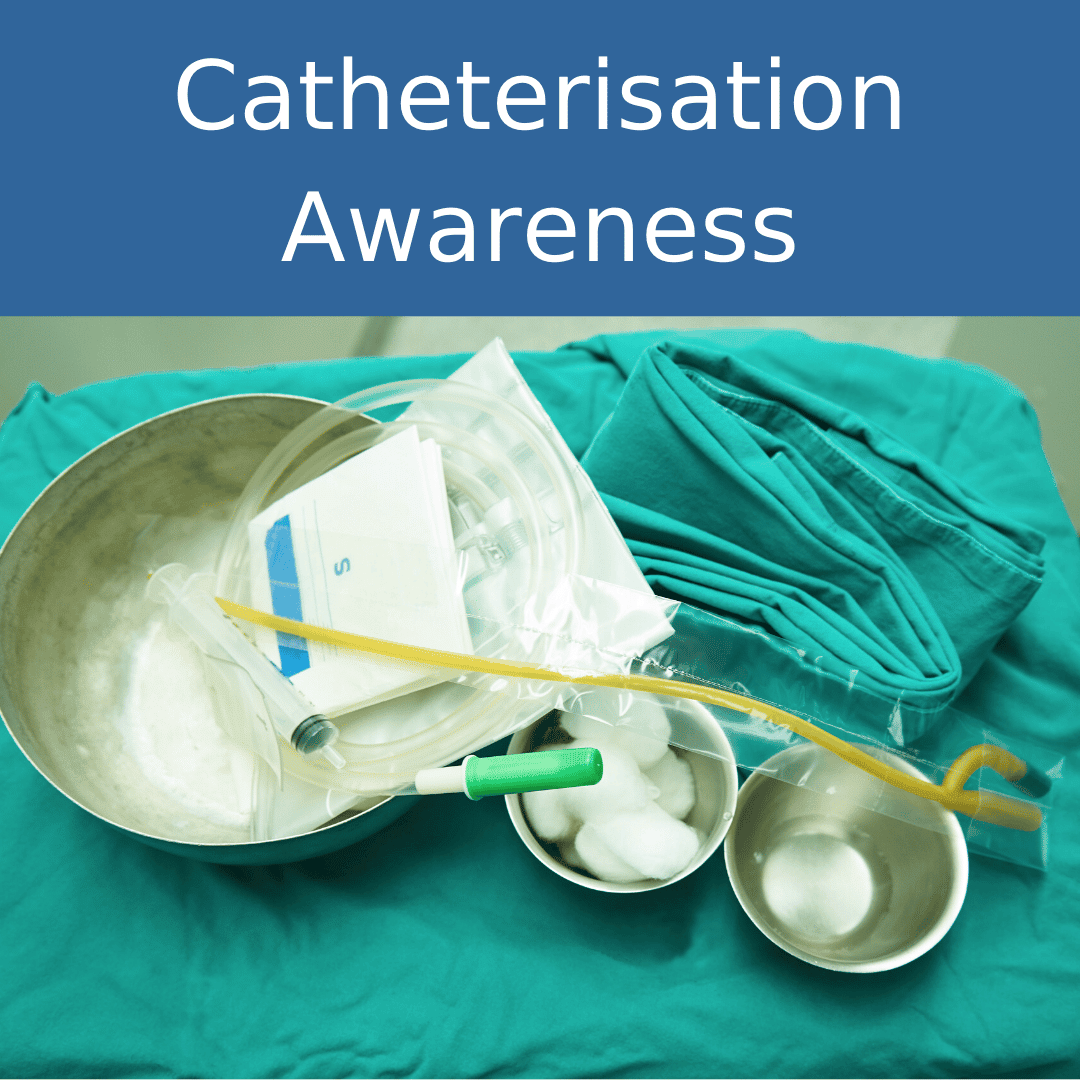
Catheterisation Awareness e Learning Course

£29.99

Catheterisation Awareness e-learning course equips care staff with essential knowledge on catheter types, hygiene, infection risks, and preventing complications. It also covers causes and types of incontinence—stress, urge, overflow, and functional—aligned with UK care standards. You can also take the practical catheterisation course with us.


Description

Catheterisation Awareness e-Learning Course

The Catheterisation Awareness e-learning course provides flexible, CPD-accredited training for care staff supporting individuals with urinary catheters.

It covers catheter types (indwelling, suprapubic, intermittent), hygiene routines, infection prevention, and escalation protocols—aligned with UK clinical standards and CQC expectations.

Learners gain confidence in documentation, safeguarding responsibilities, and dignity-led care.

The course also highlights common complications and how to respond appropriately. Completion supports safer care delivery and strengthens inspection-readiness across residential, domiciliary, and clinical settings.

No prior clinical training is required, making it suitable for both new and experienced staff. A CPD certificate is awarded upon successful completion.


📚Trainer-led Options: Catheterisation Training | Catheter Care Training | Catheter Train the Trainer Course | Catheter Train the Trainer Resource Pack | Hickman Line CVC Training


Course Information:

  • Developed by professionals
  • CPD Approved
  • 100% online, learn at your own time and pace
  • Translates into over 100 different languages
  • Instant certificate downloaded
  • Progress tracker
  • Easy to use interface.
  • 12 Month Access
  • Retake course anytime
  • Multi-choice answers


Course Contents

  • What is catheterisation: Be able to explain what a catheter is and what it does.
  • Why use catheterisation: Understand why a catheter is used for urination.
  • The causes and types of incontinence: Learn what causes incontinence and the different types.
  • Different types: Know the different types of catheters.
  • How a catheter is inserted: Understand how a catheter is put in.
  • Catheter care best practices: Learn how to care for a catheter safely and hygienically.
  • How to prevent complications: Understand how to avoid infections, blockages, and other catheter-related problems.

This covers the aspects of the e-learning catheterisation online training.


Course Content: Catheterisation Online Training

1. Understanding Catheterisation

  • What is a catheter?
  • Why are catheters used?
  • Helping with incontinence (loss of bladder control)
  • Making patients feel comfortable and respected

2. Causes and Types of Incontinence

  • Common reasons for bladder control problems
  • Main types of incontinence (e.g. stress, urge)
  • Checking patients to find out what’s causing it

3. Catheter Types

  • Differences between temporary and long-term catheters
  • Materials used (like silicone, plastic, or rubber)
  • Sizes (for kids, women, men)
  • Special features for different needs

4. Catheter Insertion Procedures

  • Keeping things clean to prevent infection
  • Getting equipment ready and preparing the patient
  • Steps for putting in different types of catheters
  • Inflating the balloon and connecting tubes
  • Keeping the catheter in place

5. Ongoing Catheter Care and Maintenance

  • Daily cleaning and preventing infections
  • Emptying and changing the bags
  • Flushing the catheter and checking for blockages
  • Spotting signs of problems with the catheter


Who is the Catheterisation e-learning course for

The Catheterisation Awareness e-learning course is designed for:

  • Care assistants and support workers who provide day-to-day support to individuals with urinary catheters.
  • Nurses and senior carers seeking to refresh or reinforce catheter-related knowledge in line with UK clinical standards.
  • Staff in residential, domiciliary, and supported living settings where catheter care is part of routine support.
  • New recruits or non-clinical staff who need awareness-level understanding to work safely around catheterised individuals.
  • Teams preparing for CQC inspections, where documentation, hygiene, and escalation protocols are under scrutiny.

It’s suitable for learners with no prior clinical training and supports safer, dignity-led care across diverse health and social care environments.


Course Benefits: Catheterisation Awareness e-Learning

  • Builds staff confidence in catheter care and hygiene routines.
  • Reinforces UK clinical standards and CQC compliance.
  • Reduces risk of infection, discomfort, and safeguarding breaches.
  • Clarifies documentation and escalation responsibilities.
  • Suitable for non-clinical and clinical care staff.
  • Supports inspection-readiness across care settings.
  • Flexible, CPD-accredited format with certificate on completion.

The e-learning course provides essential knowledge on safe catheter handling, infection prevention, and recognising complications. This improves patient comfort, dignity, and outcomes while ensuring healthcare professionals follow best practices.


🛒Buy Cheaper: Get 5 Clinical e-learning Courses and Get up to 50% Discount – Click Here.


Learning Outcomes

The key learning goals for the catheterisation e-learning course are:

  • Understand what catheterisation is and when it’s needed.
  • Know how to choose and use the right type of catheter.
  • Learn the steps for inserting and caring for a catheter.
  • Understand how to prevent infections and complications.
  • Be able to manage patients’ comfort and dignity during catheterisation.
  • Recognise and solve common problems with catheters.
  • Feel confident and capable in providing catheter care.

The catheter e-learning course helps care staff understand catheter types, hygiene routines, infection risks, and how to prevent complications and incontinence.

Course Outline: Catheterisation E-Learning

What is Catheterisation?

Understand what a catheter is and its purpose in medical care. Learn how catheters help manage urinary function for patients with specific needs.

Why Use Catheterisation?

Learn the key reasons why catheterisation is necessary for certain patients. Understand how it supports safe and effective urination when normal function is impaired.

Causes and Types of Incontinence

Explore the common causes of urinary incontinence, including physiological and pathological factors. Differentiate between types such as stress, urge, and overflow incontinence.

Different Types of Catheters

Identify the various types of catheters, including indwelling, intermittent, and suprapubic. Understand which catheter types suit different patient needs and clinical situations.

How a Catheter is Inserted

Learn the step-by-step process for aseptic catheter insertion in both male and female patients. Focus on infection control, patient comfort, and safety during the procedure.

Catheter Care Best Practices

Understand essential daily care routines to maintain catheter hygiene and function. Recognise signs of potential complications and learn how to manage catheter bags effectively.

Preventing Complications

Discover strategies to prevent common catheter-related problems such as infections, blockages, and skin irritation. Learn the importance of timely intervention to improve patient outcomes.

Assessment:

  • Multiple-choice questions to check your understanding.
  • Exercises based on real-life situations to help you apply what you’ve learned.

Certification:

  • After finishing the course, you’ll get a Catheterisation Awareness Certificate.


Course Outcomes

  • Learn what catheterisation is and why it’s needed.
  • Understand the different types of catheters and when to use them.
  • Know how to insert and care for a catheter correctly.
  • Understand what causes incontinence and how to manage it.
  • Learn how to keep things clean and avoid infection when using a catheter.
  • Be able to spot and fix problems with catheters.
  • Feel confident in providing safe and effective catheter care.
  • Make sure patients are comfortable and treated with respect.


Catheterisation training course


Catheterisation Awareness e-Learning: FAQs

1. Who is the Catheterisation Awareness e-learning course for?

It’s designed for care assistants, support workers, and nurses in residential, domiciliary, and supported living settings.

2. Do I need clinical experience to take this course?

No. The course is suitable for both new and experienced staff and does not require prior hands-on training.

3. What topics are covered in the catheter e-learning course?

Catheter types (indwelling, suprapubic, intermittent), hygiene routines, infection prevention, documentation, safeguarding, and escalation protocols.

4. Is this course aligned with UK clinical standards and CQC expectations?

Yes. It supports safe practice and inspection-readiness by reinforcing sector responsibilities and regulatory compliance.

5. Does the course include practical training?

No. As an e-learning module, it focuses on awareness and theoretical understanding, not hands-on catheterisation procedures.


How can I purchase in bulk?

We offer different options depending on how many courses you want to buy.

The quickest way is to purchase online through one of our bulk deals. The links are below.

Alternatively, you can call us on 01782 563333 or email enquiries@caringforcare.co.uk.

  • 5 Courses for £50
  • 10 Courses for £75
  • 25 Courses for £125


Clinical Training

Get the classroom experience with one of our trainers. They can come to your location for group training, or you can choose any of our locations.

Book Clinical Courses

Tell us how we can help

Tell us what you need and we will find the best solution for you fast - getting back to you within one working day - (usually the same day)

Call Us

Make Enquiry