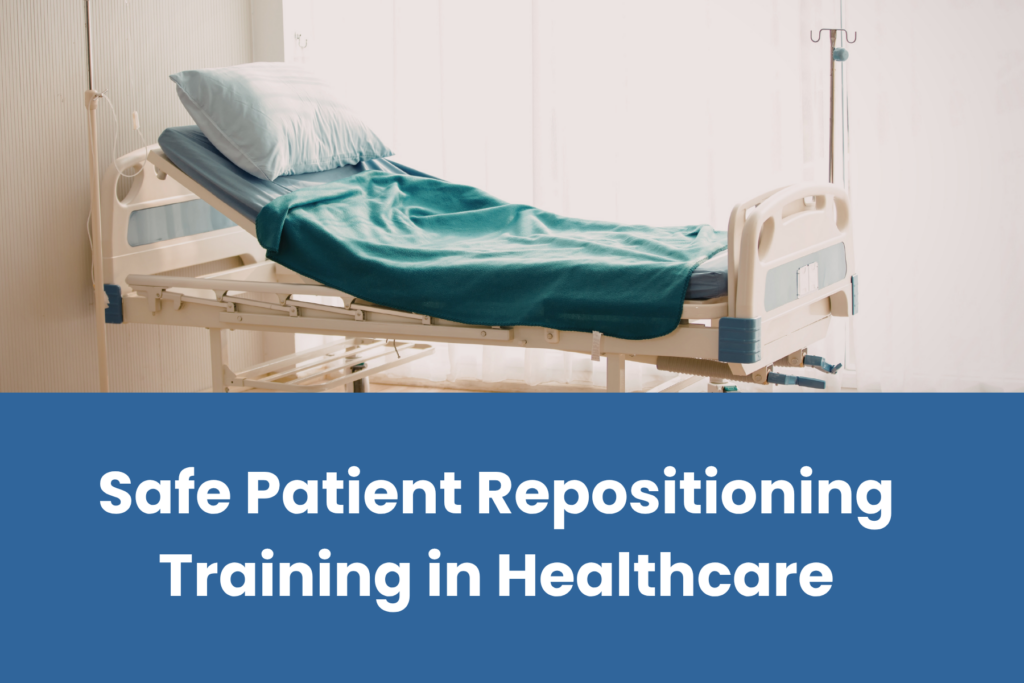
Safe Patient Repositioning Training
Repositioning training focuses on safe patient handling techniques, including the use of slide sheets, correct turning methods, and mechanical aids.
These approaches help prevent pressure damage, maintain comfort, and reduce the risk of back injury for staff. Regular repositioning, often every two hours, is essential for individuals with limited mobility.
Training covers in-bed positioning, seated transfers, and safe manual handling techniques.
👉Note: You can combine moving and handling training with pressure ulcer prevention to support safe patient repositioning. This full-day course includes comprehensive practical sessions.
📚Booking Options: In-House Training for Staff | Book Training for Yourself (Moving & Handling)
When do you need repositioning training?
You would need repositioning training when:
- You care for patients or clients with limited mobility.
- You want to prevent pressure damage and maintain comfort.
- You need to safely use slide sheets, hoists, or other aids.
- You aim to reduce the risk of staff back injuries.
- You want to ensure compliance with care and safety standards.
- You need to boost confidence in safe handling and transfers.
Patient Repositioning Training covers
Depending on your need, training can be customised to fit this aspects:
- Bed repositioning
- Standing and sitting transfers
- Bed‑to‑chair transfers
- Walking assistance
- Slide‑sheet use
- Hoist operation
- Fall‑support techniques
- Bathing/toileting transfers
- Bariatric handling
Training follows HSE and NICE guidelines and is tailored to individual needs. It teaches caregivers how to safely transfer, reposition, and support patients while protecting the health and safety of both parties.
Core Components
Safety & Prevention
Focus on reducing the risk of pressure damage by repositioning individuals at regular intervals, typically every two hours in bed or every 15–60 minutes when seated.
Techniques & Methods
- Slide sheets: Used to reduce friction and minimise strain during repositioning.
- Manual handling: Safe techniques for turning, repositioning in bed, and supporting seated positions.
- Equipment use: Guidance on hoists, profiling beds, and specialist equipment
Support surfaces: Use of pillows, wedges, and cushions to maintain correct positioning.
Safety Measures
- Maintaining safe bed height, correct posture, and proper alignment to protect both the individual and the caregiver.
Skin Integrity
- Monitoring pressure points during movement to help prevent skin damage.
Benefits of Proper Training
- Patient comfort: Reduces the risk of pressure damage and improves comfort and safety.
- Staff safety: Lowers the risk of back injuries through correct techniques.
- Preventative care: Supports regular pressure relief, essential for individuals with limited mobility.
- Staff confidence: Builds confidence in safe handling and repositioning techniques.
- Compliance: Supports adherence to HSE, NICE, and care regulatory standards.